
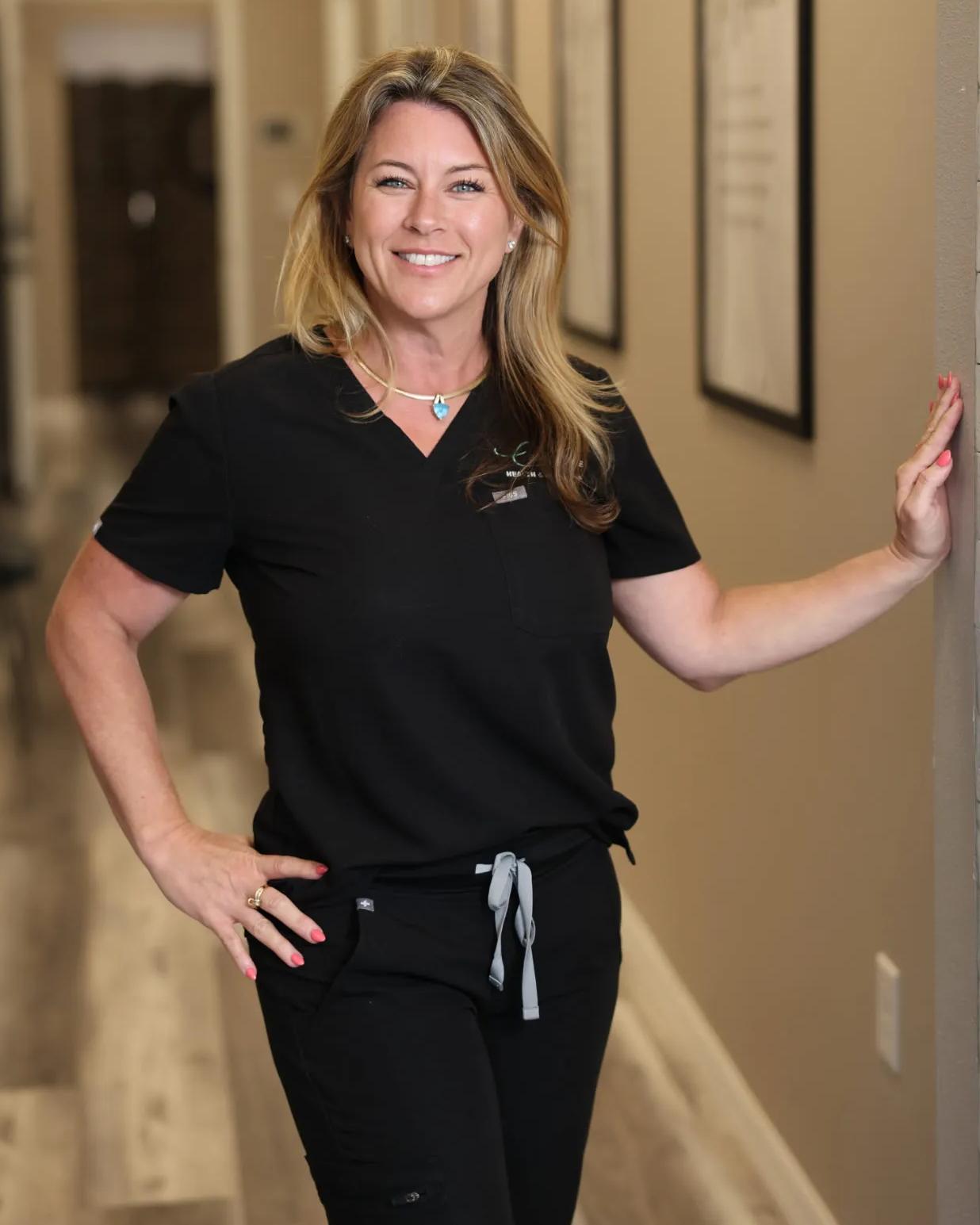
Most of what you read about hormone therapy is written by clinics. This one is different. Alexis Bowhay, PA-C — known to her audience as The Orlando Injector — is a licensed aesthetic injector who decided to talk publicly about her own experience starting testosterone therapy, and she chose Evolve to guide it. The video below is hers, unedited, and it is worth eight minutes of your time.
Disclosure: Alexis is a friend of Evolve, and she is a patient of ours. She was not paid for this video and she published it on her own channel on her own initiative. We are sharing it with her written permission because it is one of the most honest accounts of starting hormone therapy we have heard — including the parts that were hard.
Why she started
Alexis was 39, happily married, and describes the problem plainly: she was attracted to her husband, but the desire had gone quiet. As an injector she hears the same thing from women in her chair all the time — “I love him, I’m attracted to him, and it just isn’t connecting.” Low libido, low energy. Those were the reasons she reached out to Todd and Tori and said she needed help.
We started where we always start: with labs. Her testosterone came back very low. That did not make the decision easy for her. Anyone who has struggled with acne understands the fear of trading one problem for another, and she was candid that acne, hair loss, and weight gain were the reasons she almost did not start.
What the first months were really like
She decided to go ahead, on a low dose with a gentle dosing schedule designed to avoid big peaks and drops. Here is the part clinics rarely say out loud: for roughly the first eight weeks she felt nothing. No benefit, no side effects. Because she had only recently stopped hormonal birth control, that was not surprising — but it is discouraging when you are the one waiting.
At the eight-week recheck her labs had barely moved, so the dose was adjusted slightly. Then things changed — and not in the order she had hoped. Her mood got short. Her skin flared. She noticed more hair shedding. She called Todd and said she thought she needed to stop, and that would have been a perfectly reasonable decision. Instead, the side effects were addressed one at a time, and she kept going.
When it turned
Somewhere in the third eight-week stretch, in her words, “the gates opened.” Her libido came back. Her mood settled. The skin flare was under control. She did not get the “superhuman” energy some people describe — and she is honest about that too — but she got the one thing she came for, and she says her marriage feels better for it.
Her advice to other women
- Hormone therapy is not a linear path. Expect a period of adjustment, and expect your dose to be tuned more than once.
- Every patient is different. The dose that works for someone else may be too high or too low for you.
- Choose a licensed provider who does this every day, keeps up with your labs, and actually walks the journey with you.
- If you are in your 40s, perimenopausal or menopausal, and feeling like part of you has gone missing — get your labs. There are options, and you do not have to suffer silently.
A note on testosterone for women
There is currently no FDA-approved testosterone product for women in the United States, so when testosterone is prescribed to a woman it is prescribed off-label. That is a legitimate and common clinical practice, but it means the decision is individualized: a full evaluation, baseline labs, a discussion of risks and benefits, and ongoing monitoring. It is not appropriate for everyone. Alexis’s experience — including her side effects — is a good illustration of why the monitoring matters.
How Evolve approaches it
- Comprehensive labs first, and a conversation about what your results actually mean.
- If therapy is appropriate, a conservative starting point and a dosing schedule chosen for you.
- Scheduled rechecks, with adjustments based on your labs and how you feel — not a calendar.
- A provider you can call when something feels off, because sometimes it will.
You can learn more about our women’s hormone program on the Women’s Hormone Therapy page, or watch more of Alexis’s work on her YouTube channel.
Medical disclaimer: This article and the embedded video describe one patient’s personal experience and are provided for general educational purposes only. They are not medical advice and do not guarantee any result. Individual results vary. Hormone therapy is prescribed only after an evaluation by a licensed provider and is not appropriate for everyone. Talk with a qualified healthcare provider about your own situation.